Download Jdk 8 For Ubuntu
You should also download the 'JDK 8 Samples and Demos' from the Java SE download site. Step 8: (For Advanced Users Only). How to Install JDK on Ubuntu. Jul 19, 2017 How to Install Oracle Java JDK on Ubuntu Linux. This tutorial will cover the installation of 32-bit and 64-bit Oracle Java 8 (currently version number 1.8.0_20) JDK. Download JDK 8, a development environment for building applications and components using the Java programming language.
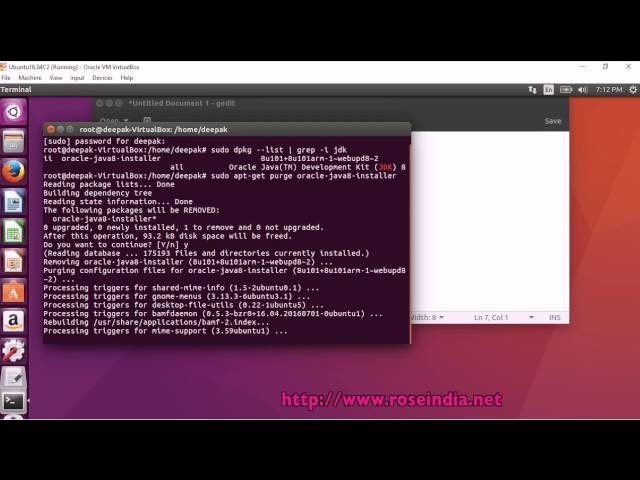
As a reminder, the WebUpd8 Oracle Java PPA doesn't include any Java binaries, just a script that automatically downloads and install Oracle Java 8. Everything is done automatically so you'll get updates through the update manager for JDK8 which includes JRE8 and the Java browser plugin. It's also important to note that the Oracle Java 8 installer is considered in alpha and is offered without any guarantees! Use it at your own risk.

Super Robot Wars For Pc. If you ISP or router blocks the ports used by the Oracle Java 8 download servers, the installation may fail. Update October 20, 2016: Previously, this package would increment the Java priority to make it default. The oracle-java8-installer package now sets the Java priority to 1081, and that may or may not set it as default, depending on other Java packages you may have installed (for instance, if Java 7 is also installed, Java 8 becomes default, but if Java 9 is installed, Java 8 doesn't become default). To make Java 8 default, you must install the 'oracle-java8-set-default' package (which configures the Java environment variables and sets it as default), which I added as a 'Recommended' package to 'oracle-java8-installer'. In Ubuntu, recommended packages are automatically installed, so 'oracle-java8-set-default' should be installed when installing 'oracle-java8-installer'. In Linux Mint on the other hand, recommended packages are not installed by default, so you must install this package manually if you want to set Oracle Java 8 as default.
Tip: if you're behind a firewall / router that blocks some of the redirects required to download the Oracle Java archive, you can download the JDK tar.gz archive manually and place it under /var/cache/oracle-jdk8-installer - then, installing the 'oracle-java8-installer' package will use the local archive instead of trying it to download it itself. After installing Oracle Java and the 'oracle-java8-set-default' package, running 'java -version' in a terminal should output something like this: andrei@andrei-desktop:~$ java -version java version '1.8.0_111' Java(TM) SE Runtime Environment (build 1.8.0_111-b14) Java HotSpot(TM) 64-Bit Server VM (build 25.111-b14, mixed mode)Or, 'javac -version': andrei@andrei-desktop:~$ javac -version javac 1.8.0_111And so on. Ludovico Einaudi Primavera Midi Downloads. Automated installation (auto accept license). The installer requires you to accept the Oracle license before the installation begins. This is only required once. If for some reason you need the installation to be automated, you can run the following command to automatically accept the Oracle license: echo oracle-java8-installer shared/accepted-oracle-license-v1-1 select true sudo /usr/bin/debconf-set-selections Switching between Oracle Java 9 and Java 7 You can have both Java 8 and installed in the same time, but only one can be set as default.
To set which is default, simply install its 'set-default' package: oracle-java8-set-default for Oracle Java 8, or oracle-java9-set-default for Oracle Java 9.
Mostly all Big Data technologies like Hadoop, Cassandra etc, are developed in Java. To work on these technologies, you need to have Java is installed on your machine. Here given the steps to install Oracle Java on Ubuntu. Go to and the required tar ball package for your platform( x86 or x64 ) 2. Extract the downloaded file with the following commands. Cd ~/Downloads/ tar -zxvf jdk-8u101-linux-i586.tar.gz 3. Create a jvm folder at the path /usr/lib/ with sudo permissions sudo mkdir /usr/lib/jvm 4.